

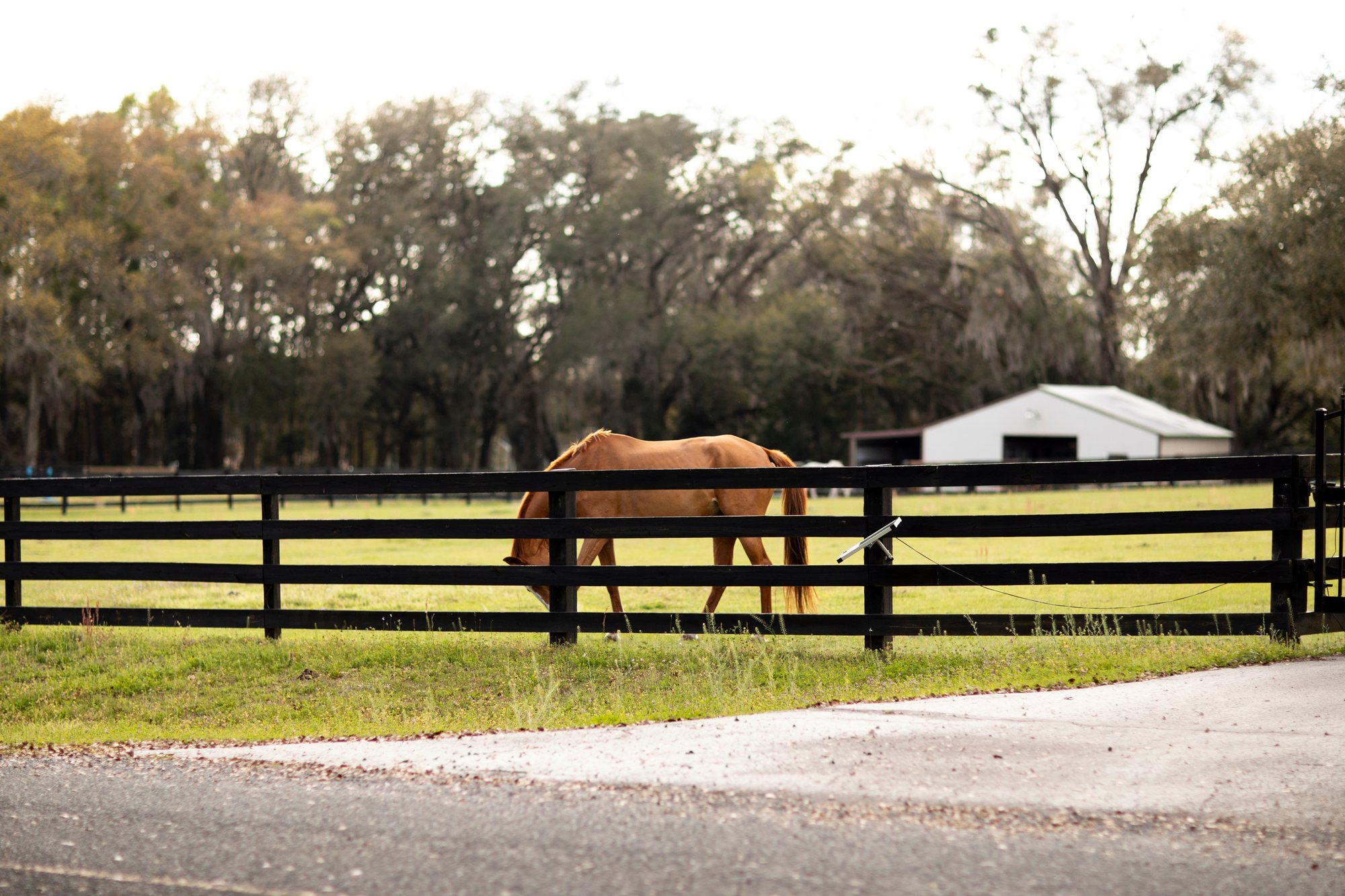
Buying a Horse Property in Southwest Ranches: Zoning, Barns and Livestock Rules
Southwest Ranches is one of the few places in South Florida where keeping horses is written into the zoning code as a permitted use. Lots start at about an acre, trails connect the neighborhoods, and barns are part of the landscape. That does not mean anything goes. How many animals you can keep, where a barn can sit and what kind of equestrian business you can run all depend on the property's zoning district and the town code.
This guide covers the rules buyers ask about most. Codes change, so use it as a starting point and confirm the details for any specific parcel with the Town of Southwest Ranches before you commit.
Start with the zoning district
The zoning district is the first thing to check on any horse property. It sets the minimum lot size, how much of the lot the house can cover, how many animals you can keep and which businesses are allowed. Most residential land falls into five districts:
- RE (Rural Estate): 1 net acre minimum.
- RR (Rural Ranches): 2 net acres or 2.5 gross acres.
- RR-A (Rural Ranches-A): 2.5 net acres, the most protective district.
- A-1 (Agricultural Estate): 2 net or 2.5 gross acres for a residence.
- A-2 (General Agricultural): 2 net or 2.5 gross acres for a residence, with working farms in mind.
Some older lots of record are grandfathered at smaller sizes, so a lot's size alone does not tell you its district. Get the district from the town or the Broward County Property Appraiser before you get attached to a property.
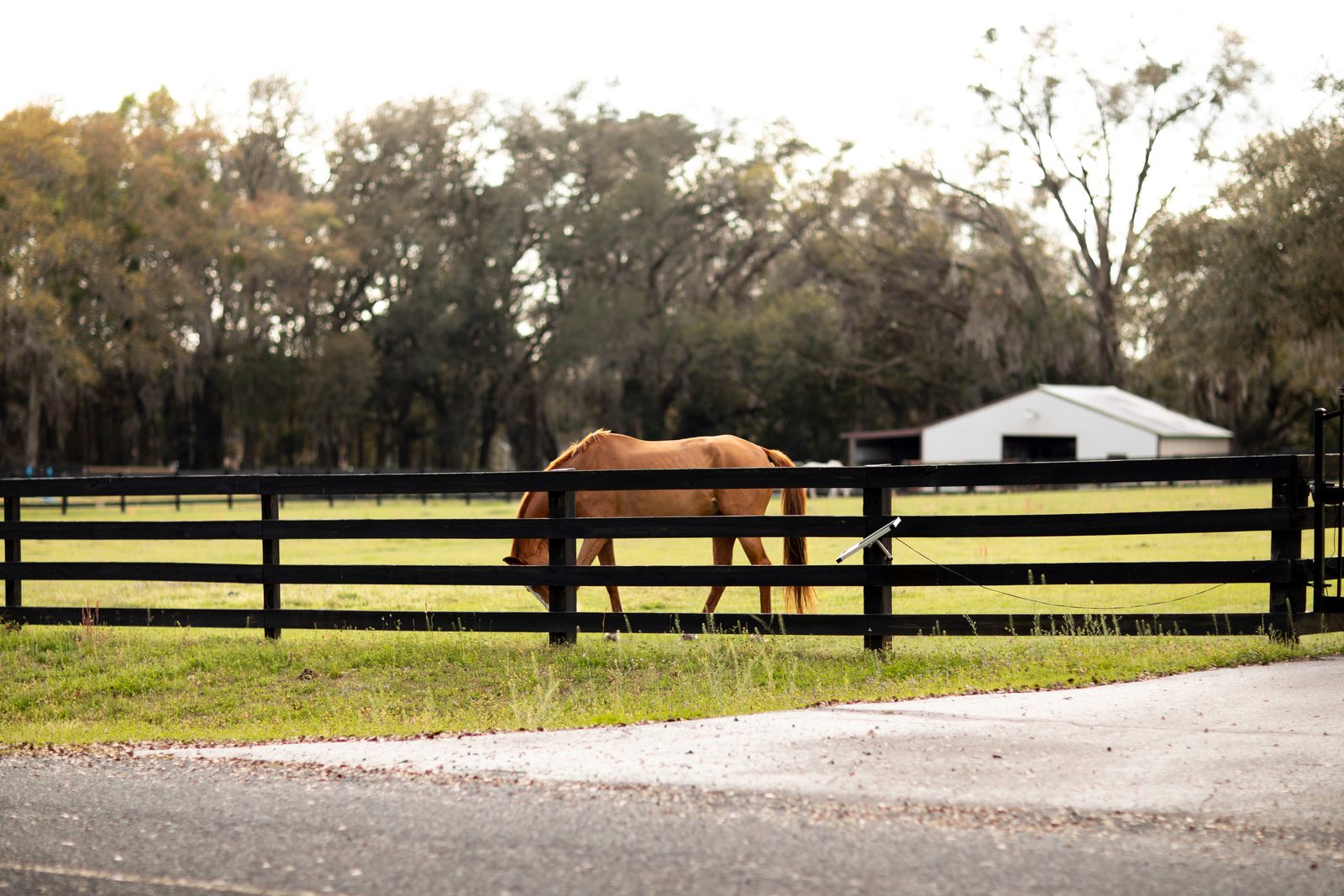
How many horses the code allows
The livestock limits are in Section 045-030 of the town's Unified Land Development Code, and they differ by district:
- RE, RR and RR-A: one livestock animal per 10,000 square feet of lot area, roughly four per acre. On lots over 4.5 net acres, one more animal per 10,000 square feet is allowed if all animals are sheltered.
- A-1: four animals per net acre. On 3.5 net acres or more, the count may be doubled if all animals are sheltered, and above 10 net acres there is no limit.
- A-2: number and type are not restricted, subject to Florida's nuisance and Right to Farm standards.
- Bona fide farms in any district: not restricted in number or type, as long as the operation qualifies under Florida law (F.S. § 823.14).
For scale, a 2.5-acre parcel in RR zoning works out to roughly ten animals under the lot-area formula. In practice, pasture management is usually the real limit, not the code.
A few details surprise even long-time owners:
- Foals and other offspring under weaning age do not count against the limit.
- In the RE, RR and RR-A districts, up to 25 birds or fowl are allowed in an enclosure set at least 50 feet from lot lines.
- Any area animals can reach must be fenced well enough to keep them off streets and neighboring land.
- Barbed wire and razor wire are not allowed as fencing. Low-voltage "hot wire" is allowed, and fences can be up to eight feet tall.
Barns, stables and arenas
The town supports barns, but they are not permit-free.
- Permits are required. Barns, stables and covered arenas go through town permitting like any other structure.
- 50-foot setbacks. Any building, roofed structure, pen or coop used to shelter or keep animals must sit at least 50 feet from property lines. On a one-acre lot that shapes the whole site plan. On 2.5 acres it is usually easy to meet.
- Farm buildings get carve-outs. Nonresidential farm buildings are exempt from the plot-coverage caps, which limit houses to between 8% and 20% of the lot depending on the district, and from the 35-foot height cap. A hay barn does not compete with the house for buildable area.
- A relief process exists. The code's noncommercial farm special exception (Article 155) lets an owner ask for relief from setback, coverage or height rules by showing that a rule restricts a generally accepted farming practice.
- Small things get cited. Feed must be stored rat-proof, and nothing can be parked or stored on the drainage swale along the road.
Equestrian businesses: check the permitted-use list
Commercial equestrian operations are a permitted principal use in the A-1, A-2, RE and RR districts, which cover most of the town. Unlike most of Broward, a legitimate boarding or training operation is on the list here.
The other side of the code is strict. Section 045-060 says any use not expressly permitted is prohibited. Do not assume an activity is allowed because horses already live on the property. Boarding, lessons, clinics, events and large-scale trailer storage each depend on whether the permitted-use list covers them. Veterinary clinics and hospitals, and commercial kennels, are not permitted anywhere in town. If you plan to run any kind of business from the property, confirm it with the town before you make an offer.
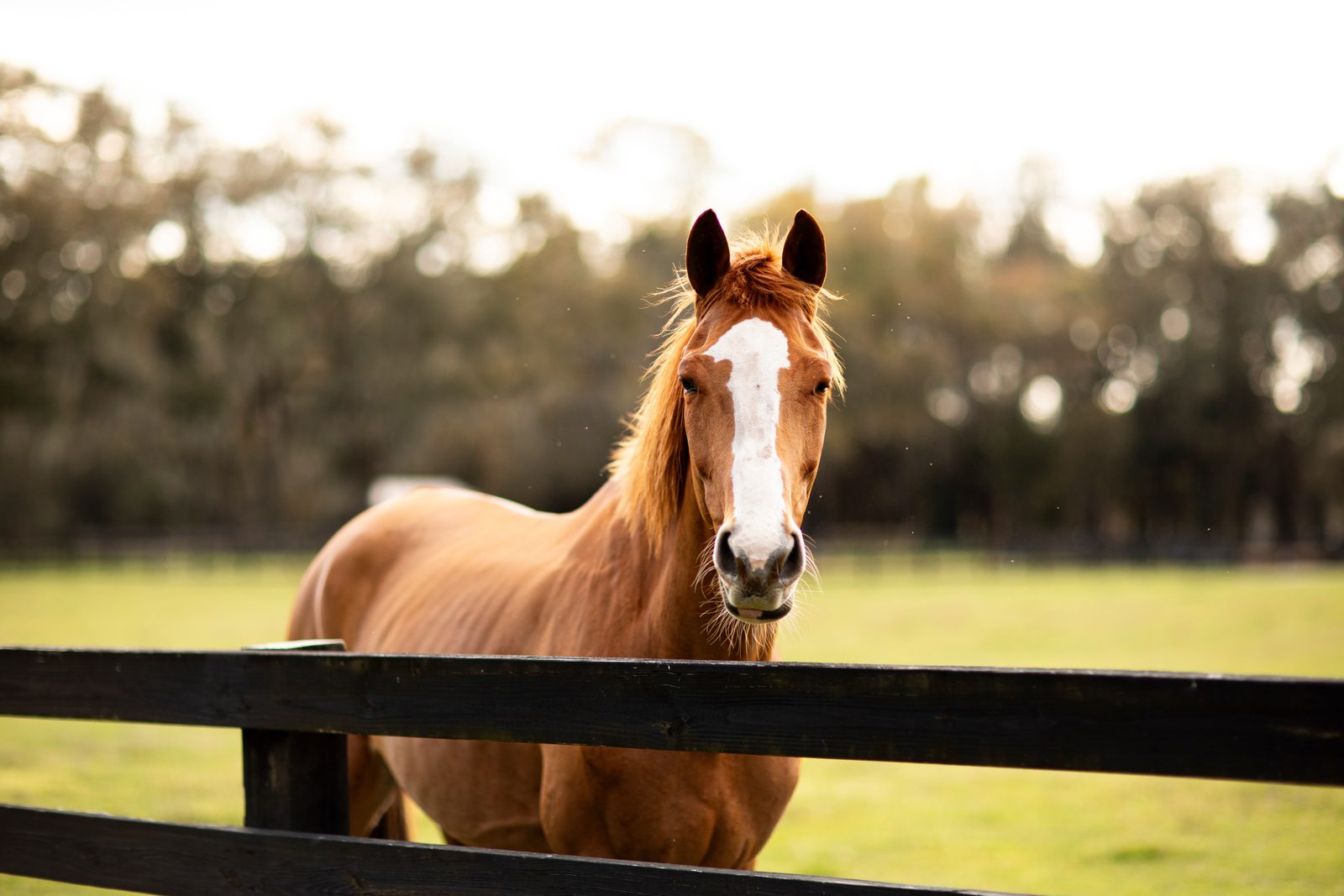
Horses and the agricultural classification
Florida's agricultural classification, often called greenbelt, lets land in bona fide commercial agricultural use be assessed at its agricultural use value instead of market value. It applies to the qualifying land, not the house, and owning horses you ride on weekends is not a commercial operation. If a property already has the classification, ask whether it will continue with your intended use, and check with the Broward County Property Appraiser before you count on it.
Where you can ride
More than 25 miles of multi-purpose trails along the town's rights-of-way link the neighborhoods and over 150 acres of parkland.
- Sunshine Ranches Equestrian Park: 20 acres, with about 10 acres of horse and nature trails.
- Rolling Oaks Park: equestrian trails along three boundaries and a restored historic barn used as a community facility.
- Country Estates Fishing Hole and Frontier Trails: 16 and 30 acres of open space with pedestrian and equestrian trails.
What to verify before you buy
- Zoning district. It decides your animal count, coverage cap and permitted businesses.
- Permit history on every structure. Unpermitted barns and arenas exist, and after closing they become your problem, not the seller's.
- Setback compliance. Check the distance from existing barns to the property lines. Grandfathered nonconformities can complicate renovations.
- Drainage and pasture elevation. A pasture that holds water all rainy season is hard on horses. Walk the land in summer if you can.
- Easements. Some parcels carry trail easements. They show up in the survey and title work.
- The septic drainfield. Horses and heavy vehicles should stay off it, so find out where it is before you plan paddocks.
Frequently Asked Questions
How many horses can I keep per acre in Southwest Ranches?
In the RE, RR and RR-A districts, the code allows one livestock animal per 10,000 square feet of lot area, roughly four per acre, with room for more on larger lots where all animals are sheltered. Limits are different in A-1 and A-2, so confirm the district first.
Do I need a permit for a barn?
Yes. Barns, stables and covered arenas need a town permit, and any structure for sheltering or keeping animals must be at least 50 feet from property lines.
Talk with Leslie
Southwest Ranches is Leslie Merino's home market. She is a REALTOR® with Lifestyle International Realty and works with buyers in English and Spanish. For more on the town's rules and daily life, read Leslie's Southwest Ranches guide. You can also browse the Southwest Ranches neighborhood guide or contact Leslie to talk through a specific property.

Written by The Merino Group. Questions? Call Leslie at (305) 710-1535.